Denver winters are hard on pools. Freezing temperatures cause real damage: cracked pipes, failed equipment, algae blooms under covers when a pool hasn’t been properly prepared for inactivity. A professional pool closing service handles water chemistry, equipment winterization, and cover installation so the pool comes back clean and undamaged when warm weather returns. This guide covers what happens during a pool winterization in Denver, when to book it, and what separates a proper closing from a rushed one.
What Is Pool Closing and Why Does It Matter in Denver
Pool closing, also called pool winterization, is the process of preparing a pool for months of inactivity. It is not just putting a cover on the water.
Denver consistently sees temperatures below freezing from November through February. Water left in pool plumbing, equipment, or return lines freezes, expands, and cracks components. That kind of damage: split pipes, cracked pump housings, broken fittings is among the most expensive pool repair work Denver homeowners face, and it’s almost entirely preventable with a correct closing. Skipping winterization or doing it incompletely is not a minor risk in this climate.
In-ground and above-ground pools require different approaches. In-ground pools have more complex plumbing and are more vulnerable to freeze damage. Above-ground pools are simpler but still need proper chemical treatment and equipment protection.
What a Professional Pool Closing Service Includes
Water Chemistry Balancing
Before anything else, the water chemistry gets adjusted pH, alkalinity, and calcium hardness brought into range. Winterizing chemicals are then added: algaecide, chlorine shock, and typically an enzyme treatment to break down organic material over the winter months. Water sitting unbalanced for four to five months causes staining, scaling, and algae growth that costs significantly more to fix in spring than the chemicals cost now.
Equipment Winterization
The pump, filter, and heater are drained completely. Any standing water left inside equipment freezes and damages internal components. Equipment is either stored appropriately or covered and protected in place depending on the setup.
Pool Lines and Plumbing
This is the most critical step. Return lines and skimmer lines are blown out with compressed air and plugged. Every drop of water needs to be cleared from the plumbing even a small amount left in a line will freeze, expand, and crack it. Plumbing damage from incomplete line clearing is the most common and most expensive result of a poor pool closing in Denver.
Water Level Adjustment
The water level is lowered below the skimmer and return lines. How much depends on the type of cover being installed. This step prevents freeze damage at the waterline and protects the skimmer from cracking.
Cover Installation
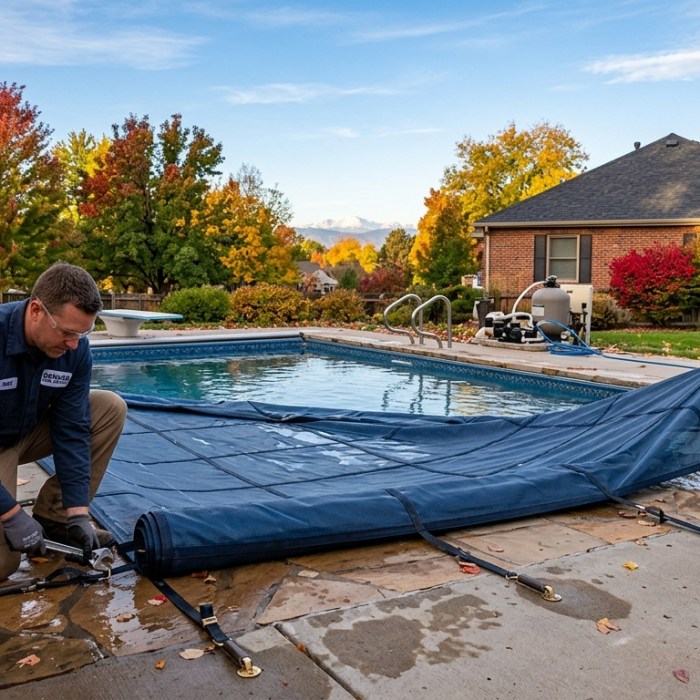
A properly fitted and anchored cover does two things: keeps debris out over winter and maintains water quality so the spring opening is faster and cleaner. Denver’s wind is a real factor; a cover that isn’t properly anchored doesn’t stay in place. Safety covers, which anchor into the pool deck, provide better protection than standard winter tarps and are the recommended choice for in-ground pools.
What Pool Closing Does Not Include
A pool closing service covers winterization not repairs, equipment replacement, leak detection, structural inspection, or deck cleaning. If you know of existing issues a crack, a leak, equipment that’s been running rough, flag them before the closing appointment. Some problems are easier and cheaper to address before the pool is closed than after it sits for five months.
When to Book Pool Closing in Denver
The target window is late September to mid-October.
The timing comes down to water temperature. Closing a pool while the water is still warm above 65°F accelerates algae growth under the cover over winter, which means a difficult and expensive spring opening. Waiting too long in the other direction means risking a hard freeze before the service can get there.
Denver can see freezing temperatures in October. Waiting until November to book is a genuine risk to your plumbing and equipment. September is when Denver pool closing services fill up most reputable companies book two to three weeks out during peak season. If you’re thinking about it in late September, call immediately.
What happens if you close too late: water in unprotected lines freezes before the team arrives. That’s not a closing problem at that point, it’s a repair job.
DIY vs Professional Pool Closing
DIY pool closing is possible for above-ground pools with simple plumbing, particularly for homeowners who have done it before and have the right equipment, an air compressor rated for line blowout, the correct winterizing chemicals, and proper plugs.
For in-ground pools, the case for professional service is straightforward. The most common DIY mistakes: incomplete line blowout, incorrect chemical ratios, cover not properly secured lead directly to the damage that pool closing is supposed to prevent. One freeze-damaged return line costs more to repair than several years of professional closing service.
If you have a heater, an automatic cover system, or any uncertainty about whether your lines are fully cleared, use a professional. The math isn’t complicated.
Before the Pool Closing Team Arrives
A few things make the service faster and more effective:
Remove toys, floats, ladders, and any pool accessories before the team arrives. Clear visible debris from the water surface. Make sure all equipment pump, filter, heater is accessible. If you know of any existing issues with the pool, mention them when you book rather than at the appointment. And if you have a record of recent chemical treatments, share it to help the team calibrate the winterizing chemistry correctly.
What Happens in Spring
A properly closed pool opens faster, cleaner, and cheaper. Water that was balanced before closing and protected with the right winterizing chemicals comes back in significantly better condition than water that sat unbalanced under a loose cover all winter.
A poorly closed pool typically needs algae treatment, extended shock, and equipment inspection before it’s swimmable and if freeze damage occurred, repairs before any of that. The quality of your pool closing in October directly determines how your pool opening goes in May. For more on what spring pool preparation involves, see the Denver pool summer prep guide. For current pool cleaning costs, the pool cleaning cost guide for Denver covers what to expect.

Conclusion
Denver’s freeze timeline doesn’t give pool owners much margin. The window between water being cool enough to close and temperatures cold enough to cause damage is narrow, usually a few weeks in late September and early October. A professional pool cleaning service in Denver handles the chemistry, the equipment, and the plumbing correctly the first time. The cost of a proper closing is considerably less than the cost of a single freeze-damage repair. To book your Denver pool winterization service before the season fills up, call Missa Clean at (720) 325-1600.
FAQs
When should I close my pool in Denver?
Late September to mid-October is the target window. Water temperature should be consistently below 65°F before closing warm water accelerates algae growth under the cover over winter. Don’t wait until November; Denver can see hard freezes in October and professional services book up fast in September.
How much does pool closing cost in Denver?
Pool closing costs vary based on pool size, type, and what’s included. In-ground pools with more complex plumbing cost more than above-ground pools. For current pricing, see the Denver pool cleaning cost guide or call Missa Clean at (720) 325-1600 for a direct quote.
What happens if I don’t winterize my pool in Denver?
Water left in pool plumbing and equipment freezes, expands, and cracks pipes, fittings, and pump components. Freeze damage is the most expensive pool repair Denver homeowners face and it’s almost entirely preventable with a correct closing.
Can I close my pool myself in Denver?
Above-ground pools with simple plumbing are manageable for experienced owners with the right equipment. For in-ground pools, professional service is strongly recommended. Incomplete line blowout the most common DIY mistake leads directly to freeze damage that costs far more to repair than the closing service would have cost.
How long does a professional pool closing take?
Most residential pool closings take two to four hours depending on pool size, complexity, and condition. In-ground pools with heaters or automatic cover systems take longer than straightforward above-ground setups.
Do I need to drain my pool completely to close it for winter?
No. The water level is lowered below the skimmer and return lines, but the pool is not fully drained. Draining an in-ground pool completely can cause the shell to shift or crack due to hydrostatic pressure from groundwater. A partial lowering combined with proper line blowout and plugging is the correct approach.