Green clean and eco-friendly are on almost every cleaning company’s website in Denver. But terms like these don’t, by themselves, tell you which products, ingredients, or cleaning practices a company actually uses. This post breaks down what green cleaning generally involves, which certifications carry real weight, and how to tell genuine eco-friendly cleaning from a marketing claim.
What "Green Cleaning" Generally Means
Green cleaning broadly focuses on reducing exposure to harmful chemicals, minimizing environmental impact, using responsibly selected cleaning products, and reducing unnecessary waste. It is not a fixed, universally regulated definition which is exactly why the label alone doesn’t tell you much.
What it does not automatically mean: fragrance-free, allergen-free, or certified organic. A plant-derived product can still contain fragrance compounds that trigger sensitivities. Before booking any eco-friendly cleaning service in Denver, ask one question: “Which specific products do you use, and what certifications do they carry?” If they can’t answer clearly, the label is marketing.
Certifications That Actually Mean Something
Third-party certification is the most reliable way to verify a green claim.
EPA Safer Choice — A product certification program that evaluates ingredients against EPA safety criteria while requiring the product to meet performance standards. One of the most credible certifications available for residential cleaning products.
Green Seal — An independent nonprofit that certifies both products and cleaning services against documented environmental and health standards. A certified service has been audited on product selection, waste practices, and training.
EcoLogo (UL Environment) — A North American standard that evaluates products across their full lifecycle.
Labels with no regulated definition: “natural,” “non-toxic,” “chemical-free,” “plant-derived,” “biodegradable,” “green.” These may be accurate but a green claim alone doesn’t tell you enough. Look for a recognized certification and specific product information, not just the label.
Why Indoor Air Quality Matters More in Denver
Denver’s cold winters can make extended window ventilation impractical for months at a time, which makes product selection and indoor air quality especially relevant during colder months. Most Denver homes rely on forced-air HVAC systems, so when cleaning products leave residue on surfaces, those compounds can circulate through the air system rather than dissipating through open windows.
Denver households also have plenty of everyday surface contact: kids playing on floors, dogs grooming themselves, and people coming indoors after outdoor activities. What’s on a cleaned surface ends up on hands, pet fur, and sometimes in mouths. In this context, what a cleaning service puts on your surfaces is a practical concern, not just a preference.
Who Benefits Most
Families with infants and toddlers — Floor-level contact and hand-to-mouth behavior means chemical residue on surfaces is a direct exposure concern.
Pet owners — Animals groom themselves and come into regular contact with cleaned floors and surfaces. Using products specifically selected for safer use around pets can help reduce unnecessary chemical exposure.
People with fragrance sensitivities or asthma — People who are sensitive to fragrances or certain cleaning chemicals may prefer fragrance-free, lower-emission products. Choosing products with recognized safety certifications can help reduce unnecessary exposure.
Airbnb hosts — Guests have unknown sensitivities, and a property that smells strongly of cleaning chemicals can create a negative first impression. Environmentally friendly cleaning products can help create a fresher, more neutral environment for a broader range of guests. For hosts who need consistent turnovers between stays, Airbnb cleaning services in Denver can help keep the property guest-ready.
What Green Cleaning Actually Looks Like in Practice
Some hydrogen peroxide-based disinfectants can provide effective disinfection for specific bacteria and viruses when used according to the product’s EPA-registered label directions without the fumes associated with bleach-based formulations. Plant-derived surfactants replace petroleum-based ones in all-purpose cleaners and dish soaps. Citric acid handles mineral descaling where conventional services might use harsher products.
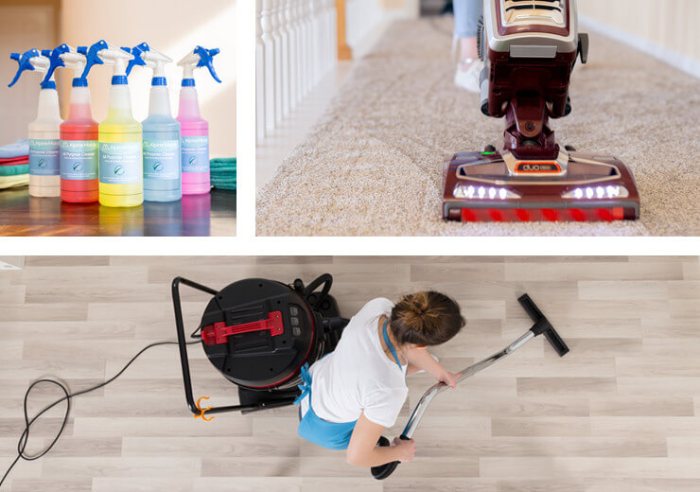
Microfiber cloths replace disposable paper towels. Microfiber physically lifts particles rather than pushing them around, which means less product is needed per surface. Professional teams use color-coded systems to prevent cross-contamination between bathrooms and kitchen areas.
One honest limitation: severe mold, heavily burned oven interiors, and significant hard water scaling sometimes require stronger interventions than standard green products can handle. A reputable eco-friendly cleaning service in Denver will explain these limitations upfront and recommend the right approach, including professional deep cleaning when needed.
Questions to Ask Before You Book
- Which specific products do you use? Can you share names or certifications?
- Are any products EPA Safer Choice or Green Seal certified?
- Do you use microfiber or disposable materials?
- How do you handle tough jobs grease, mold, and hard water staining without conventional chemicals?
- Do you bring your own products, or use what the client provides?
A company genuinely committed to sustainable cleaning services answers all of these without hesitation.
How Missa Clean Approaches Green Cleaning
At Missa Clean, when clients ask about our products, we answer specifically not with general language about caring for the environment. If you have sensitivities or prefer to use your own certified products, that conversation happens before we show up. And if a surface genuinely needs a stronger approach than standard eco-friendly products can handle, we’ll tell you rather than cutting corners or switching products without your knowledge. For a green cleaning service in Denver that’s straightforward about what goes into your home, call Missa Clean at (720) 325-1600.
Conclusion
“Eco-friendly” without specifics is just a label. Green cleaning as an actual practice recognized certifications, microfiber over disposable, transparent about limitations makes a real difference in Denver homes where HVAC systems run year-round and winter months limit natural ventilation.
The question isn’t whether a company calls themselves green. It’s whether they can tell you exactly what’s in the bucket, what certification it carries, and what they do when standard products aren’t enough.
Call Missa Clean at (720) 325-1600 to book an eco-friendly house cleaning in Denver or ask about our product approach before scheduling.
FAQs
Is eco-friendly cleaning as effective as conventional cleaning?
For most residential tasks, yes. EPA Safer Choice and Green Seal certified products are evaluated for cleaning performance alongside safety. Some heavy-duty jobs, severe mold, significant oven buildup may still need stronger interventions, and a good green cleaning service will tell you that upfront rather than overpromising.
What products are safer for use around babies and pets?
Products carrying EPA Safer Choice certification have been evaluated against EPA safety criteria. Fragrance-free formulations are generally preferable for households with infants and animals. Ask your cleaning service for specific product names and certifications rather than relying on unregulated terms like “natural” or “non-toxic.”
How do I know if a cleaning company is genuinely eco-friendly?
Ask for product names and certifications. A company working with certified products answers this immediately. Vague responses about caring for the environment without specific certification details are a sign the label is being used loosely.
Does eco-friendly cleaning cost more in Denver?
Not necessarily. Pricing depends on property size and scope, not primarily on product type. The more useful question is whether the company is transparent about what they use; that’s the real indicator of whether the green claim is genuine.
What does EPA Safer Choice mean?
It’s a product certification program run by the U.S. Environmental Protection Agency that evaluates ingredients against EPA safety criteria while requiring the product to meet cleaning performance standards. It’s one of the most credible third-party certifications available for residential cleaning products.
Is “natural” or “non-toxic” on a label regulated?
No. Either term can appear on any product without meeting a defined standard or submitting to third-party review. The only way to verify the claim is a recognized certification like EPA Safer Choice, Green Seal, or EcoLogo.