Table of Contents
Hard water stains are one of the most visible leftovers in a short-term rental. A cloudy shower door or spotted faucet can make a clean unit look dirty, and the marks can come back after almost every stay. Hard water stains on Airbnb glass, faucets and fixtures usually respond best to a surface-safe descaler, short dwell time, gentle scrubbing and thorough drying. Use acidic cleaners carefully, especially around natural stone and specialty finishes. This guide covers which spots guests notice first, how to treat each surface within a turnover-sized window, and how to reduce buildup between stays.
Why Hard Water Stains Show Up So Often in Colorado Springs Rentals
Hard water carries dissolved minerals, mainly calcium and magnesium. When a drop of it dries on glass or chrome, the water leaves and the minerals stay behind as a white spot or a cloudy film. With heavy shower use and steam, the film builds up fast.
Water hardness can vary depending on the water source and property, but mineral deposits become noticeable when water repeatedly dries on glass, fixtures and other surfaces. To see what applies to your property, check the Colorado Springs Utilities water quality, which includes a section on hard versus soft water.
For a rental, the point is practical: guests turn over often, each stay adds new deposits, and the marks sit exactly where guests look.
Which Stains Guests Notice First
When time is short, clean in order of what guests see in the first minute:
- Shower glass or door
- Bathroom faucet and showerhead
- Toilet bowl near the waterline
- Kitchen faucet and sink
- Drinking glasses and glassware
- Kettle and coffee maker
It also helps to know what you’re looking at. Soap scum is greasy and white or gray, and comes off with a regular bathroom cleaner. Hard water film is a dull haze that wipes off glass with an acidic cleaner. Limescale is a thick, chalky crust around faucets and showerheads that needs soaking time.
Before You Clean: Safe Products and Surface Rules
Most mineral deposits break down with a mild acid, such as white vinegar or a descaling cleaner made for bathrooms. The risk is using it on the wrong surface.
- Check the surface first. Acidic products can dull or etch natural stone like marble and travertine, and some finishes and grout sealants don’t tolerate them either.
- Never mix cleaners. In particular, don’t combine vinegar with bleach or any bleach-based product, because it releases harmful fumes.
- Test a hidden spot, ventilate the room, and rinse thoroughly after.
- Follow the label on any commercial descaler and on the manufacturer’s care guidance for your fixtures.
Surface | Usually safe | Avoid |
Glass (shower door, mirrors) | White vinegar solution, glass-safe descaler | Abrasive pads |
Chrome and finished fixtures | Manufacturer-approved cleaner, or diluted vinegar only if the finish allows it; rinse and dry | Long soaks on delicate or coated finishes |
Porcelain toilet bowl | Toilet-bowl descaler used per label | Mixing with any other cleaner |
Natural stone and some grout | pH-neutral stone-safe cleaner | Vinegar and other acids |
Stainless steel | Damp cloth, mild solution, dry wipe | Steel wool, harsh abrasives |
How to Remove Hard Water Stains in an Airbnb Bathroom
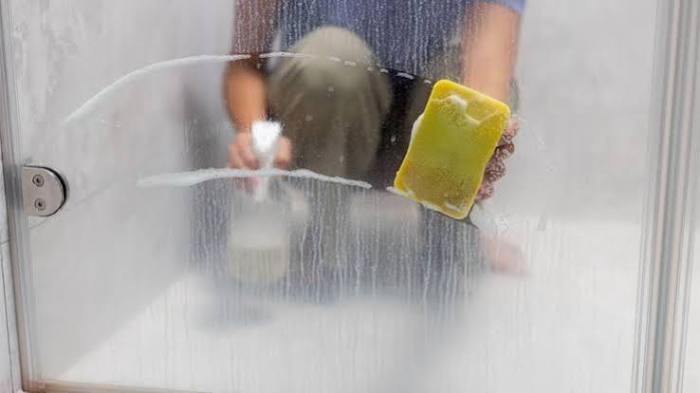
Shower glass. Spray the glass with a glass-safe descaler, or a diluted white vinegar solution where the glass and surrounding surfaces allow it, and keep it damp for about 10 to 15 minutes. Wipe with a microfiber cloth, rinse, then squeegee dry. Drying is what prevents the next set of spots.
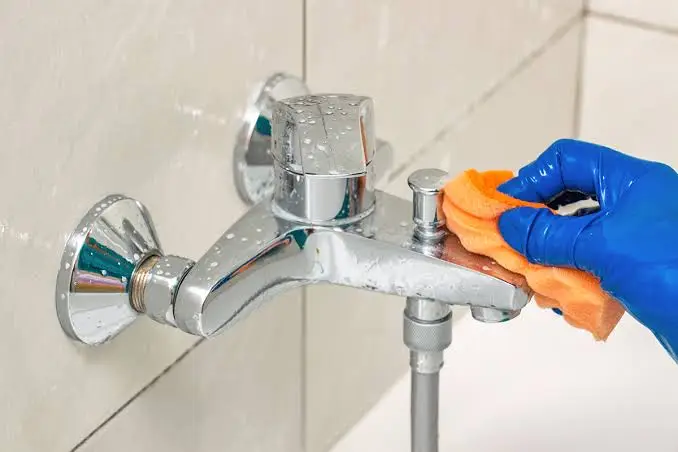
Faucets and showerheads. For limescale, use a manufacturer-approved descaler, or wrap a cloth soaked in diluted vinegar around the faucet only if the finish allows it. Keep contact time short and check the finish often so it doesn’t sit too long. Scrub gently with a soft brush and rinse. For a showerhead that’s clogged with scale, check the manufacturer’s instructions before soaking it.
Toilet waterline. Use a toilet-bowl descaler made for limescale, follow its label for contact time, then scrub with a bowl brush and flush. Never mix it with other bowl cleaners, bleach or vinegar. Different products can contain different acids or bleach, and combining them can release harmful fumes.
Tile and grout. Use a cleaner that’s safe for your tile type. If the tile is natural stone, or you don’t know what the sealant is, skip the vinegar and use a pH-neutral product.
Always give each step its dwell time and do other tasks while it works. That’s what makes this realistic inside a turnover.
How to Remove Hard Water Stains in an Airbnb Kitchen
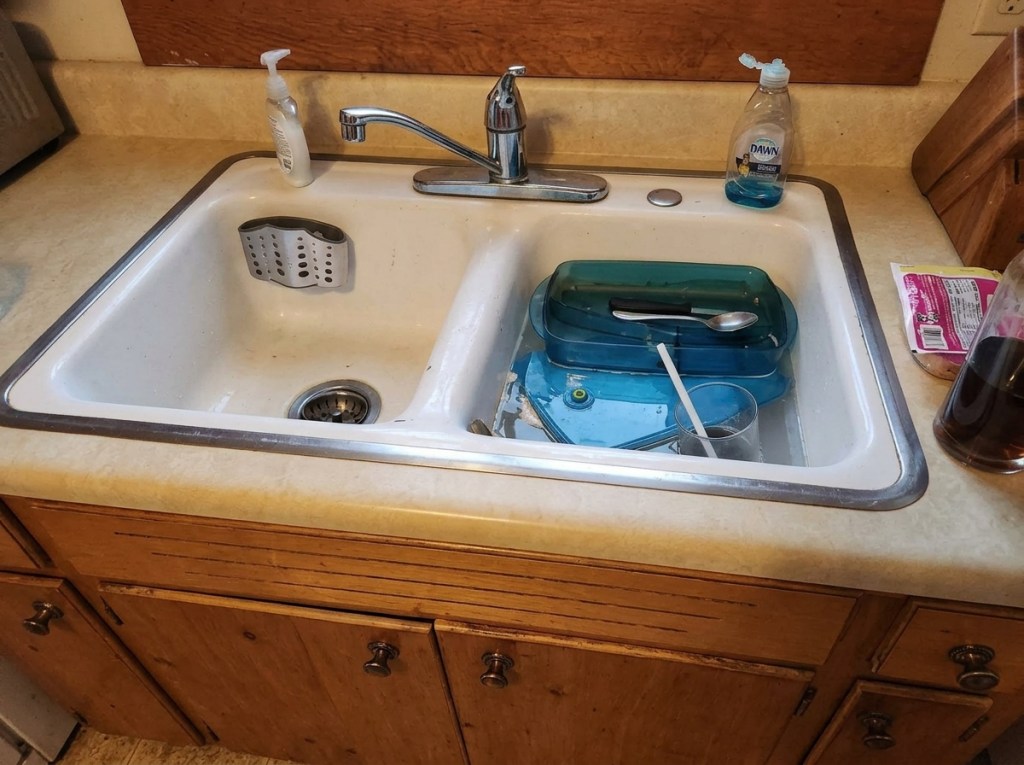
Kitchen faucet and sink. Wipe the faucet with a damp cloth and a mild, diluted vinegar solution if the finish allows it, rinse, and dry with a clean cloth. For a stainless sink, wipe in the direction of the grain and dry afterward. Avoid steel wool and harsh abrasives, which scratch the finish.
Glassware. Cloudy glasses make a kitchen feel unclean. Soak them briefly in a diluted white vinegar solution, rinse well and dry. If the cloudiness doesn’t come off, the glass may be etched, which is permanent, and replacing the glass is the fix.
Kettle and coffee maker. Guests use these within the first hour. Descale them using the manufacturer’s instructions, then run clean water through to rinse.
Fitting It Into a Same-Day Turnover
Time is the real constraint. A workable order:
- Apply product to the shower glass, faucets and toilet bowl first.
- Clean the rest of the bathroom and kitchen while the products work.
- Come back, scrub, rinse and squeegee or dry everything.
- Finish with a quick dry-polish of the chrome.
Save the slower jobs, like descaling showerheads and appliances, for a deeper clean between bookings. For the rest of the turnover routine, use our Airbnb turnover cleaning checklist.
How to Reduce Hard Water Buildup Between Guests
Removing stains is faster when there’s less to remove.
- Dry after use. A squeegee in the shower and a microfiber cloth for the faucet cut spotting a lot. A short note in the welcome guide asking guests to squeegee the glass can help.
- Dry-polish during every turnover. A quick wipe of chrome and glass prevents spots from setting.
- Descale on a schedule. Showerheads, faucet aerators, kettles and coffee makers collect scale quietly, so descale them regularly or whenever you see buildup.
- Consider the water itself. If buildup is constant, property owners sometimes look into water treatment. That’s a plumbing decision best discussed with a local water professional.
Dust is a separate problem in this area, and we cover it in our guide on why Colorado Springs Airbnbs get so dusty.
When It's Worth Hiring a Professional Cleaning Team in Colorado Springs
DIY works for regular upkeep. It’s harder when buildup has etched the glass, when several units turn over on the same day, or when you can’t be on site.
When you talk to a cleaner, ask what they use on glass and natural stone, how they handle heavy scale, and whether descaling is part of a standard turnover or an add-on.
Missa Clean works with hosts on Airbnb turnovers in Colorado Springs. If you’d like to talk through your property, see our Colorado Springs Airbnb cleaning service or get in touch.
FAQs
Does vinegar remove hard water stains from shower glass?
Yes, for most hard water film on glass. Keep the surface damp with a diluted white vinegar solution for 10 to 15 minutes, wipe, rinse and squeegee dry, provided the glass and surrounding surfaces allow it. Heavy buildup may need a second pass.
Can I use vinegar on natural stone or grout?
Usually not. Acids can dull or etch natural stone and may affect some grout sealants. Use a pH-neutral, stone-safe cleaner and check the manufacturer’s guidance.
How do I get hard water spots off glassware?
Soak the glasses briefly in a diluted white vinegar solution, rinse and dry. If they stay cloudy, the glass may be etched and won’t come clean.
How often should I descale a showerhead or kettle in a rental?
There’s no single schedule. Check them during regular deep cleans and descale whenever you see buildup or notice reduced flow or a chalky film.
Why do hard water stains come back so quickly?
Because the minerals stay behind every time a wet surface dries. Drying glass and chrome after use, and during each turnover, is what slows them down.