Table of Contents
Your cleaner finished, the place looked spotless, and the checkout photos were perfect. Then a guest runs a finger across the TV stand on day one, and the review says “a little dusty.” It’s frustrating, and in Colorado Springs it’s common. Dry conditions, heating, and constant guest traffic all work against a freshly cleaned space, and a few spots get missed on almost every clean. A lot of it comes down to how the cleaning is done. Here’s why dust returns and what a thorough clean does differently.
Why Dust Keeps Coming Back in Colorado Springs Rentals
Dust returns quickly in Colorado Springs rentals because of a mix of factors: dry indoor air, HVAC airflow, dust coming in from outside, and frequent guest turnover. A surface wiped at checkout can look dusty again by evening, especially if the cleaning only moved dust around.
Dry Air, Heating and HVAC Airflow
Colorado’s dry indoor air can allow fine particles to remain airborne longer, while HVAC airflow can move them between rooms before they settle on surfaces. Once the furnace runs regularly in colder months, indoor air tends to get drier, and a forced-air system carries whatever is in the air from room to room.
Outside dust comes in with every guest
Windy days, nearby construction, and dry soil put dust in the air outside. It follows guests in on shoes and clothes, enters through door and window gaps, and rides in on pets’ paws.
Frequent guest turnover
A rental sees more foot traffic, more luggage, and more door openings than a lived-in home. More movement means more dust brought in and stirred up between cleans.

The Spots That Get Missed
Most dust complaints trace back to places that sit above eye level or out of sight. Guests notice them more than hosts expect, and some check under the bed and on top of wardrobes.
- Ceiling fan blades and light fixtures
- Vent covers and return grilles
- Baseboards and window sills
- Under the bed and behind the headboard
- Tops of wardrobes, picture frames, and shelves
- TV stands and behind monitors
- Lampshades and curtain rods
If a cleaner works from a basic list, these are the first things skipped when a turnover window is tight. Fan blades and vents in particular can go weeks without attention, then show up in a guest’s review.
Why the Cleaning Method Matters More Than the Time Spent
A dry feather duster or a dry cloth lifts dust into the air, and it settles back on the same surfaces within hours. That’s why a room can look clean at checkout and dusty by evening, even when the cleaner worked hard.
A thorough clean follows a different order:
- Top to bottom. Fixtures, fan blades, and shelves first, then furniture, then floors last, so dust falls onto surfaces that haven’t been cleaned yet.
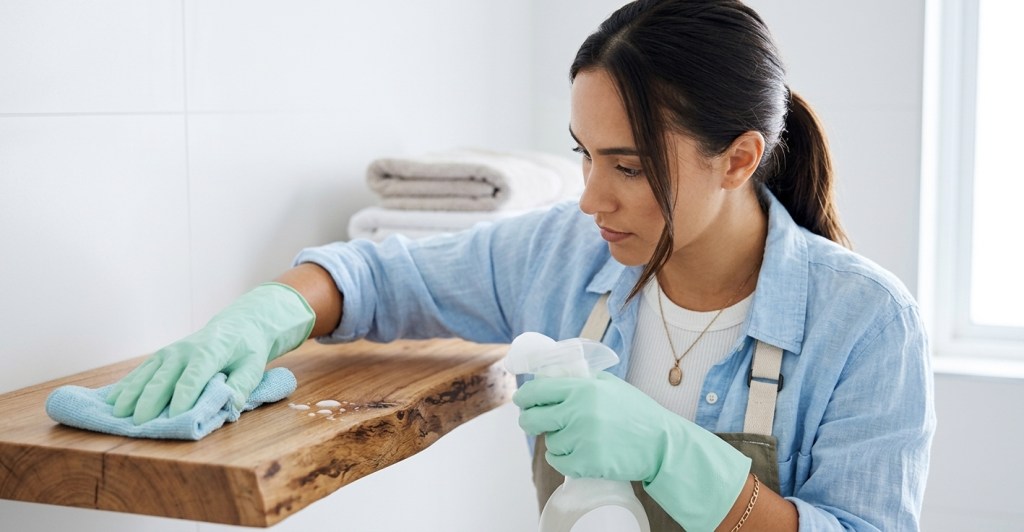
- Damp microfiber. It traps dust instead of flicking it into the air.
- Detail passes. Vents, baseboards, window tracks, and under-furniture areas get wiped, not skipped.
- A well-sealed vacuum with good filtration. Poorly filtered vacuums can exhaust fine particles back into the room.
- Final walk-through. One last check with the lights on, looking at surfaces from a guest’s angle.
It sounds simple, but it’s the difference between removing dust and relocating it.
What Hosts Can Do Between Cleans
Cleaning does most of the work, but small habits reduce how fast dust builds back up.
- Put an entry mat and a shoe tray at the door, with a short note in your house guide
- Add a line about wiping pets’ paws if the listing is pet-friendly
- Wash throw blankets and decorative pillow covers on a schedule
- Keep surfaces simple, since clutter and heavily textured decor collect more dust
- Check HVAC filters regularly, because a clogged filter can push dust back into the air
Indoor humidity is worth a look too. The EPA recommends keeping indoor relative humidity below 60 percent, ideally between 30 and 50 percent, and a basic hygrometer will show where your property sits. If readings are very low or the system seems to be spreading dust, an HVAC technician is the right person to call. That’s a maintenance issue, separate from cleaning.
How Dust Shows Up in Guest Reviews
Guests may not always mention dust specifically. Instead, it can show up in comments about cleanliness or in a lower cleanliness rating, sometimes only in private feedback, so you may see a score drop without knowing why.
If a guest does raise it, keep the reply short and specific:
“Thanks for letting us know. We’re sorry the space didn’t feel fresh when you arrived. We’ve added extra attention to dust-prone areas for future stays and appreciate you telling us.”
Skip the arguing and the blame. A calm response reads well to future guests who scan your replies.
When to Bring in a Professional Cleaning Team
If you’re cleaning between guests yourself, or relying on one independent cleaner, dust is often the first thing to slip when time gets tight. A professional team makes sense if:
- Dust complaints keep coming up despite your efforts
- Vents, fans, and baseboards are rarely cleaned
- Back-to-back bookings leave little time for detail work
- You manage the property remotely and can’t inspect each turnover
A team-backed service like Missa Clean can hold a consistent standard across stays, work through the high and hidden spots on a rotation, and cover when a cleaner is sick or double-booked. If you host in the area, you can learn more about Airbnb cleaning in Colorado Springs, or call (720) 325-1600 to talk through your property.
FAQs
Why does my Airbnb get dusty so fast after cleaning?
Dry indoor air, HVAC airflow, guests’ shoes, and pets all bring dust back quickly, and missed spots like fan blades and vents add to it. Damp microfiber and a top-to-bottom order help dust stay removed.
Does Colorado’s dry air make indoor dust more noticeable?
It can. Dry indoor air may let fine particles stay airborne longer, and HVAC airflow can carry them between rooms before they settle. Outdoor dust, guest traffic, and filtration also play a part, so it’s rarely one cause alone.
Which spots do cleaners most often miss?
Ceiling fan blades, vent covers, baseboards, window sills, under the bed, and the tops of wardrobes and shelves. These sit out of sight, so they get skipped when time is short, but guests notice them.
Is dry dusting or damp dusting better for a rental?
Damp microfiber is better. Dry dusters tend to push dust into the air, where it settles back on the same surfaces. A damp cloth traps the dust so it leaves the room.
Can a guest leave a bad review because of dust?
Yes. Dust can lower the cleanliness rating even when nothing else is wrong, and it sometimes appears only in private feedback. A quick, polite reply and attention to the problem areas can limit the damage on future stays.
How often should vents and fans be cleaned in a vacation rental?
There’s no fixed rule, but fan blades and vent covers should be wiped on a regular rotation, not left until a guest notices. High-turnover properties benefit from adding them every few stays.