Cooking is one of life’s greatest joys but the mess it leaves behind on your stove top? Not so much. Greasy grates, burnt residue, baked-on food keeping your stove clean can feel like a never ending battle. Missa Clean put together 9 easy, proven methods to clean any stove top using simple household items like baking soda, vinegar, and dish soap with no harsh chemicals needed.Whether you need a quick daily wipe-down or a deep clean, this guide covers every stove type: gas, glass, and electric.
What You'll Need Before You Start Cleaning
Before diving into any cleaning method, it helps to gather your supplies first. Having everything ready makes the process faster and far less frustrating. Here’s what the Missa Clean team recommends keeping handy:
Basic Cleaning Supplies:
- Baking soda
- White vinegar (in a spray bottle)
- Grease-cutting dish soap
- Hydrogen peroxide
- Microfiber cloths or soft sponges
- Plastic scraper or silicone spatula (for glass tops)
- Old toothbrush (for burner ports and tight corners)
- Paper towels
- Small mixing bowl
Safety First: Always make sure your stove is completely turned off and cool to the touch before you begin any cleaning. Cleaning a warm or hot surface can cause burns and may damage your stovetop’s finish.
How to Clean a Gas Stove Top
Gas stoves are powerful cooking tools, but their open burners and cast iron grates tend to collect grease, food spills, and carbon buildup faster than other stove types. The good news is that with the right approach, even heavily soiled gas stove grates can look brand new.

Step-by-Step Gas Stove Cleaning Instructions
- Make sure the stove is off and completely cool before touching anything.
- Remove all grates and burner caps carefully and set them aside.
- Fill your sink with hot water and dish soap, then submerge the grates for 15–20 minutes to loosen grease.
- While the grates soak, wipe down the main stovetop surface with a damp microfiber cloth to remove loose crumbs and debris.
- Apply a baking soda paste (baking soda mixed with a little water) to any stubborn spots and let it sit for 5–10 minutes.
- Scrub the surface gently with a non-abrasive sponge.
- Rinse the soaked grates thoroughly, scrub off any remaining residue, and dry completely before placing them back.
- Use an old toothbrush to gently clean around the burner ports clogged ports cause uneven flames and reduced cooking performance.
How to Clean Gas Stove Grates
Gas stove grates take the hardest beating from daily cooking. Missa Clean recommends one of these three methods depending on how dirty they are:
Dishwasher Method: If your grates are dishwasher-safe (always check your manual first), simply run them through a full hot cycle. This is the easiest, most hands-off approach for lightly soiled grates.
Baking Soda + Vinegar Paste: Mix 2 parts baking soda with 1 part white vinegar to form a thick paste. Coat the grates generously, let them sit for 20 minutes, then scrub with a stiff brush and rinse well. This method works beautifully on moderately dirty grates.
Overnight Ammonia Bag Method: For very heavily soiled grates, place each one inside a large zip-lock bag with a small splash of ammonia. Seal the bag and leave overnight. The ammonia fumes, not the liquid itself, loosen the grease so it simply wipes away in the morning with almost no scrubbing needed. Make sure to do this in a well-ventilated area and never mix ammonia with other cleaning products.
How to Clean Gas Stove Burners
Burner caps need occasional cleaning to ensure even flame distribution. Wipe them gently with a damp cloth after they’ve cooled. For the igniter the small ceramic cylinder near each burner clean it with a barely damp cloth only and let it dry completely before using the stove again. Never submerge igniters in water as this can prevent your stove from lighting.
How to Clean a Glass Top Stove
Glass and ceramic stovetops look stunning when spotless, but they require a bit more care than gas stoves. Their smooth surface makes everyday cleaning easier in theory, but burnt-on residue and scratches from wrong cleaning tools are real risks. Missa Clean always recommends non-abrasive tools and gentle solutions on glass surfaces.
Daily Cleaning Routine for Glass Stoves
After each cooking session, once the surface has cooled, wipe it down with a soft cloth dampened with warm water and a few drops of dish soap. This simple 2-minute habit prevents food and grease from hardening on the surface and makes your deep cleaning sessions much less frequent and much easier.
Deep Cleaning with Baking Soda and Vinegar
- Let the glass stovetop cool completely, never clean a hot glass surface.
- Spray the entire surface generously with white vinegar.
- Sprinkle a layer of baking soda directly over the vinegar.
- Lay a hot, damp towel over the surface and leave it for 15 minutes. The steam and fizzing reaction work together to loosen burnt food and grease.
- Remove the towel and use it to wipe away the residue in circular motions.
- Spray once more with vinegar and polish dry with a clean microfiber cloth for a streak-free shine.
How to Remove Burnt-On Food from a Glass Stove Top
For stubborn burnt spots that won’t respond to regular cleaning, make a paste of baking soda and hydrogen peroxide, apply it directly to the burnt area, and let it sit for 10–15 minutes before scrubbing with a soft cloth. For very hardened residue, a plastic razor blade scraper held at a strict 45-degree angle can carefully lift the gunk without scratching the surface. Always do this on a damp surface.
What NOT to Use on a Glass Stove Top
- Steel wool or abrasive scrubbing pads
- Chlorine bleach
- Ammonia-based cleaners
- Abrasive powder cleansers
- Cast iron pans dragged directly across the surface
How to Clean an Electric Stove Top
Electric stoves come in two varieties: coil burner models and flat glass-ceramic tops. The cleaning approach differs between the two, so it’s worth knowing which type you have before you start.
Cleaning Electric Coil Burners
Coil burners can usually be carefully lifted and pulled out for easier access. The most important rule: never submerge electric coils in water that permanently damages the electrical connections. Instead, wipe them gently with a barely damp cloth once completely cool. The drip pans sitting beneath the coils can be removed, soaked in hot soapy water, and scrubbed clean with a baking soda paste for a thorough clean.
Cleaning a Flat-Top Electric Stove
Flat-top electric stoves with a glass-ceramic surface are cleaned using the exact same methods as glass stove tops baking soda and vinegar, the hot towel technique, and a plastic scraper for stubborn spots. Refer to the glass stove top section above for the full step-by-step process.
9 Easy Ways to Clean a Stove Top — Complete Missa Clean Guide
Now that we’ve covered stove-type-specific techniques, here are the 9 best methods for getting your stovetop sparkling clean. Each one uses simple household ingredients and works on most stove surfaces.
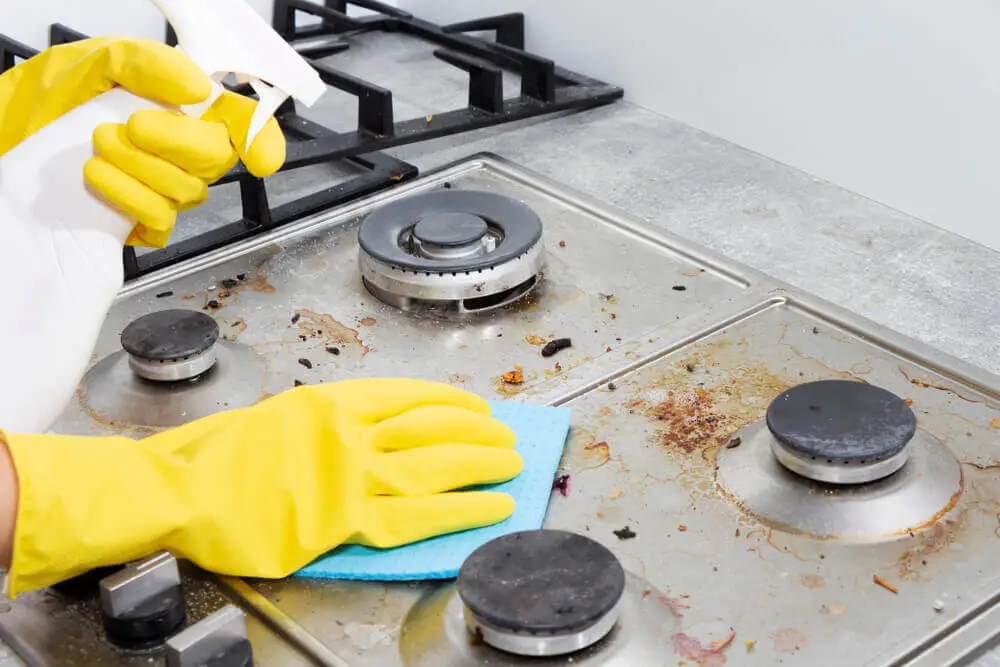
Method 1: Baking Soda + Hydrogen Peroxide
What You Need: Baking soda, hydrogen peroxide, soft cloth or sponge
Best For: Burnt-on gunk, tough stains, white or porcelain stovetops
Steps:
- Mix half a cup of baking soda with enough hydrogen peroxide to form a slightly runny paste.
- Apply the paste directly onto the stained or grimy areas of your stovetop.
- Let it sit for 10–15 minutes longer for very stubborn stains.
- Scrub gently with a soft cloth in circular motions.
- Wipe clean with a damp cloth and rinse thoroughly.
Pro Tip: For extra stubborn spots, apply the paste and cover with plastic wrap for 30 minutes. The extended contact time breaks down even the most deeply baked-on residue.
Method 2: Baking Soda + White Vinegar
What You Need: Baking soda, white vinegar (in spray bottle), hot damp towel
Best For: Grease buildup, glass tops, everyday deep cleaning
Steps:
- Spray the stovetop surface liberally with white vinegar.
- Immediately sprinkle a layer of baking soda over the vinegar.
- Watch the fizzing reaction. This is the natural cleaning chemistry at work, loosening grease and food residue.
- Lay a hot, damp towel over the surface and leave for 15 minutes.
- Remove the towel and use it to wipe away all residue.
- Finish with a clean dry cloth for a streak-free shine.
Pro Tip: This is the Missa Clean go-to method for glass ceramic stovetops. The hot towel creates a gentle steam effect that lifts grease without any harsh scrubbing at all.
Method 3: White Vinegar Spray
What You Need: 1 cup white vinegar, 2 cups water, spray bottle, microfiber cloth
Best For: Light daily cleaning, degreasing, quick maintenance wipe-downs
Steps:
- Mix 1 cup of white vinegar with 2 cups of water in a spray bottle.
- Spray the cooled stovetop surface generously.
- Let it sit for 5 minutes to break down light grease and food residue.
- Wipe clean with a damp microfiber cloth.
- Buff dry with a fresh cloth for a spotless finish.
Pro Tip: Keep this spray bottle permanently on your kitchen counter. A 2-minute spray and wipe after every cooking session means you’ll rarely ever need a heavy deep clean again.
Method 4: Dish Soap + Baking Soda
What You Need: Grease-cutting dish soap, baking soda, warm water, sponge
Best For: Greasy gas stove surfaces, general all-purpose cleaning
Steps:
- Sprinkle baking soda generously over the greasy stovetop surface.
- Add a few drops of dish soap directly on top.
- Add a splash of warm water to activate the mixture into a foamy paste.
- Spread the paste evenly and let it sit for 5 minutes.
- Scrub with a damp non-abrasive sponge, then rinse thoroughly with a clean wet cloth.
Pro Tip: A concentrated grease-cutting dish soap works especially well here. The combination of dish soap and baking soda creates a powerful foamy cleaner that cuts through cooking grease effortlessly even grease that’s been sitting for days
Method 5: Lemon + Baking Soda
What You Need: 1 lemon (halved), baking soda, damp cloth
Best For: Natural antibacterial cleaning, light stains, leaving a fresh scent
Steps:
- Sprinkle a generous layer of baking soda across the stovetop surface.
- Cut a lemon in half and use the cut side to scrub the surface, squeezing gently as you go.
- The lemon juice reacts with the baking soda to create a gentle cleaning foam.
- Scrub greasy spots and stains in circular motions.
- Wipe clean with a damp cloth and buff dry.
Pro Tip: Lemon has natural antibacterial and degreasing properties, making this method eco-friendly and effective. It also leaves your kitchen smelling wonderfully fresh. Perfect for a quick clean before guests arrive!
Method 6: Salt + Baking Soda Paste
What You Need: 1 tbsp salt, 1 tbsp baking soda, warm water, cloth
Best For: Gas stove grates, burnt spots that need a slightly abrasive approach
Steps:
- Mix 1 tablespoon of salt and 1 tablespoon of baking soda in a small bowl.
- Add enough warm water to form a thick paste.
- Apply the paste directly to stained or burnt areas.
- Scrub in firm circular motions with a cloth or sponge.
- Rinse off completely with clean water and dry well.
Pro Tip: The salt adds a mild abrasive quality that makes this paste excellent for gas stove grates and cast iron surfaces. Avoid using this method on glass or ceramic cooktops; the salt particles can leave micro-scratches on smooth surfaces.
Method 7: Olive Oil or Vegetable Oil
What You Need: Olive oil or vegetable oil, soft cloth, all-purpose cleaner
Best For: Polishing stainless steel stove tops, removing fingerprints and surface marks
Steps:
- Apply a small amount of olive oil or vegetable oil to a soft cloth.
- Rub the oiled cloth over the stainless steel stovetop surface, moving in the direction of the metal grain.
- The oil loosens stuck-on grease and fingerprints while adding a protective shine.
- Spray a small amount of all-purpose cleaner on a fresh cloth.
- Wipe the surface down to remove oil residue and buff to a brilliant shine.
Pro Tip: This method works particularly well for stainless steel stove tops that look dull or are covered in fingerprints and smudges. The thin oil coating left behind actually helps repel future grease splatters, making your next clean even easier.
Method 8: Boiling Water Method
What You Need: Boiling water, dish soap, sponge
Best For: Quick emergency clean when no other products are available
Steps:
- Boil a full kettle of water.
- Make sure your stovetop is cool, then carefully and slowly pour the boiling water over the surface.
- Allow the hot water to sit for 2–3 minutes to soften food particles and loosen grease.
- Once the water is safe to touch, scrub with a sponge and a little dish soap.
- Wipe clean and dry the surface thoroughly.
Pro Tip: This is the ultimate last-resort method when you’ve run completely out of cleaning supplies. The heat from the boiling water softens baked-on food remarkably well, significantly cutting down the amount of scrubbing needed. Always pour slowly and keep your hands clear.
Method 9: Commercial Stovetop Cleaner
What You Need: Weiman Cooktop Cleaner, Bar Keepers Friend, or similar commercial product
Best For: Severely neglected stoves, professional-grade deep cleaning sessions
Steps:
- Read the product label and instructions carefully before starting.
- Apply a small amount of cleaner to the stovetop surface.
- Use the non-abrasive scrubbing pad (included with most products) and scrub in circular motions.
- Leave the cleaner on the surface for the time specified on the label.
- Wipe away completely with a clean damp cloth.
- Polish with a dry microfiber cloth for a streak-free, gleaming finish.
Pro Tip: Missa Clean always recommends trying natural methods first. Commercial cleaners should be your last resort. They are effective but contain stronger chemicals that aren’t necessary for routine maintenance. Always ensure your kitchen is well-ventilated when using these products.
How to Remove Burnt Grease from a Stove Top
Burnt grease is one of the most frustrating stovetop cleaning challenges. If your regular cleaning routine isn’t cutting through years of buildup, here are the most effective targeted approaches:
Overnight Baking Soda Method: Cover the entire affected area with a thick layer of dry baking soda. Spray generously with white vinegar, then lay damp hot towels over everything and leave overnight. By morning, even hardened grease from years of cooking should be soft enough to wipe away with minimal effort.
Hydrogen Peroxide Power Paste: Apply a thick paste of baking soda and hydrogen peroxide directly to the burnt grease. Cover with plastic wrap and leave for several hours or overnight. The extended contact time works to dissolve even long-standing carbon residue that nothing else seems to touch.
Plastic Razor Scraper Glass Tops Only: Hold a plastic or razor blade scraper at a strict 45-degree angle and carefully slide it under hardened residue. Always work on a damp surface and apply gentle, even pressure. Never use metal scrapers at a steep angle; this is the most common cause of scratches on glass stovetops.
Important: Never use steel wool, metal scourers, or harsh abrasive pads on any stovetop surface. These tools create permanent scratches that make future cleaning significantly harder and permanently damage the appearance of your stove.
How Often Should You Clean Your Stove Top?
Consistency is the secret to a stove that always looks clean. Missa Clean recommend following this simple maintenance schedule:
Frequency | What to Clean | Best Method |
After every use | Wipe surface | Warm water + dish soap |
Weekly | Grates, burners, drip pans | Baking soda + vinegar soak |
Bi-weekly | Full stovetop deep clean | Baking soda + hydrogen peroxide |
Monthly | Complete deep clean + burner ports | All surfaces + toothbrush clean |
The single most important habit is to clean spills immediately while they are still warm. A fresh grease splatter wipes up in 30 seconds the same spill left to cool, dry, and bake on can take 30 minutes to remove. That tiny extra effort right after cooking saves you enormous time and energy later.

Stove Top Cleaning Tips to Prevent Buildup
Prevention is always better than cure. These simple habits from Missa Clean will dramatically reduce how often you need to do a serious deep clean:
- Always use pot lids while cooking to minimize splattering across the stovetop surface.
- Wipe spills immediately never let them cool and harden on the surface.
- Keep a spray bottle of diluted white vinegar beside your stove for a quick post-cooking spray and wipe.
- Dry pots and pans thoroughly before placing them on burners water creates mineral deposits on glass tops over time.
- Use appropriately sized cookware for each burner to reduce spillovers.
- Check and clean gas burner ports monthly to maintain proper, even flame distribution.
- Apply a thin coat of specialized cooktop protector cream to glass tops monthly for added stain resistance.
Conclusion
A clean stove top doesn’t just look better, it cooks better, lasts longer, and makes your entire kitchen feel more welcoming. With these 9 easy cleaning methods from Missa Clean, you have everything you need to tackle any level of stovetop grime, from a fresh everyday spill to years of baked-on buildup.
The most important takeaway from this guide is to start gently and only escalate if needed. Baking soda and vinegar will handle 90% of all stovetop cleaning jobs without any harsh chemicals whatsoever. Save the commercial cleaners for genuine emergencies only.
Whether you have a gas stove with cast iron grates, a sleek glass ceramic cooktop, or a classic coil electric stove, these methods are tried, tested, and approved by the cleaning experts at Missa Clean. Your stovetop and your kitchen will thank you.
FAQs
What is the best thing to clean a stove top with?
Baking soda and white vinegar together they break down grease and food residue without any harsh chemicals.
How do you clean a really dirty stove top?
Make a thick paste of baking soda and hydrogen peroxide, apply it directly, cover with plastic wrap, and leave overnight. Wipe away in the morning.
How do you clean a stove top without scratching it?
Always use a soft microfiber cloth or non-abrasive sponge. Never use steel wool or metal scrapers. On glass tops, use a plastic scraper at a 45-degree angle.
Can you use baking soda on a glass stove top?
Yes, completely safe but always use it with a soft cloth, never an abrasive scrubber. Rinse thoroughly afterward to avoid white residue.
How do I get burnt-on grease off my stove top?
Mix baking soda and hydrogen peroxide into a paste, apply to the burnt area, wait 10–15 minutes, then scrub in circular motions with a soft cloth.
Is vinegar safe for all stove tops?
Mostly yes safe on glass, ceramic, porcelain, and stainless steel. Only avoid it on natural stone surfaces as it can dull the finish.