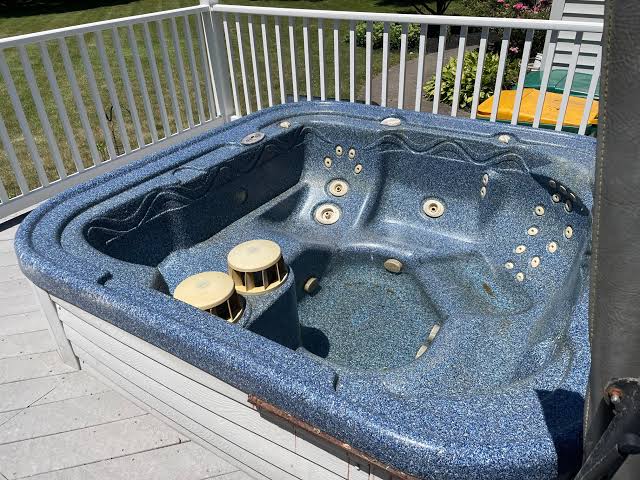
Cleaning a hot tub can feel like a big chore, draining all the water, scrubbing the shell, and refilling takes time, effort, and lots of water. Fortunately, you don’t always have to do a full drain to keep your spa safe and sparkling. With the right tools and techniques, you can maintain clean water, remove debris, clean filters, and balance chemicals between deep cleans. In this guide, Missa Clean shows you step-by-step how to care for your hot tub, protect your equipment, and enjoy a safe, relaxing soak whenever you want—without draining the entire tub every time.
Cleaning a Hot Tub Without Draining Water
Keeping your hot tub water clean doesn’t always require harsh chemicals. Regular maintenance, like skimming debris, cleaning filters, and using a water clarifier, helps keep water clear naturally. Running the jets after adding a small dose of non-chlorine shock or natural sanitizer helps circulate and sanitize the water without overusing chemicals. Avoid household cleaners, bleach, or abrasive products, as they can damage your tub and upset water balance.
Is It Really Safe to Clean a Hot Tub Without Draining?
You do not always need to drain the hot tub to keep it hygienic. Cleaning a hot tub without draining is best for regular hot tub maintenance between full water changes. It helps maintain a clean environment, improve water quality, and reduce wear on your filtration system.
However, there are times you still need to drain the water completely. If your hot tub water is very cloudy, smells bad, has visible slime on the shell, or the hot tub hasn’t been used in months, you should drain the hot tub and perform a full deep clean instead of trying to clean a hot tub without a full drain.
How to Get Rid of Biofilm in a Hot Tub Without Draining
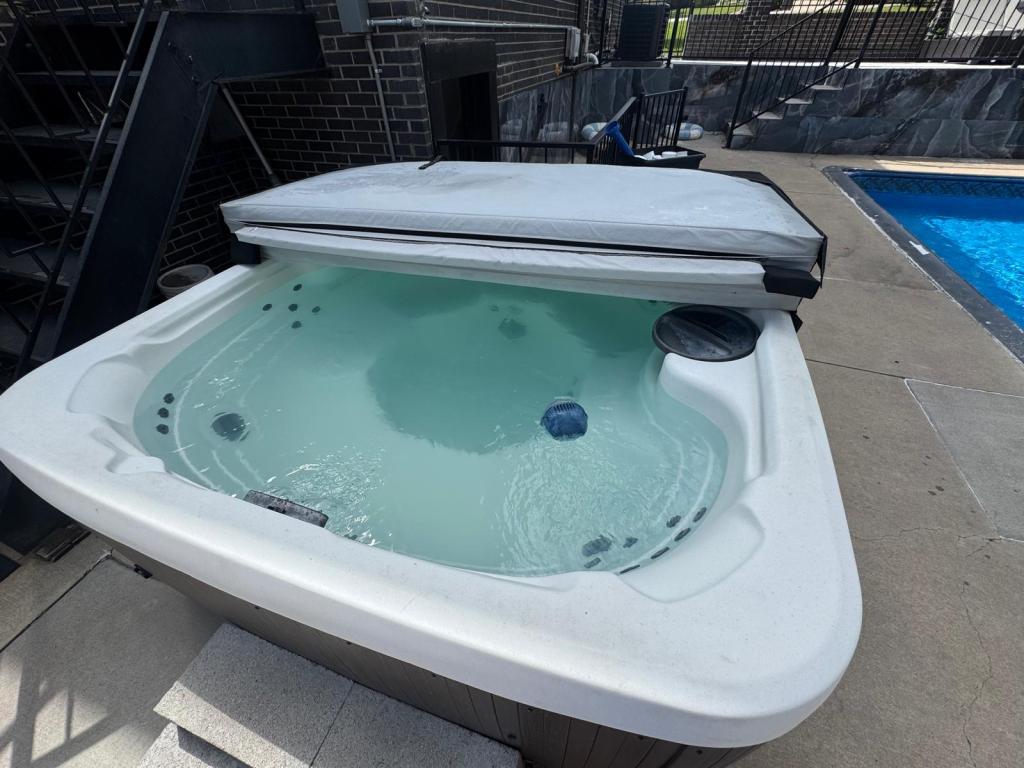
Biofilm is a slimy layer of bacteria and organic material that can form inside hot tub plumbing, jets, and on surfaces. Even if the water looks clear, biofilm can harbor germs and reduce sanitizer effectiveness.
To remove biofilm without draining the tub, follow this detailed step-by-step guide.
- Use a plumbing line flush – Add a spa-approved biofilm remover to your water and run the jets for 15–20 minutes. This circulates the cleaner through pipes, dislodging buildup.
- Shock the water – After flushing, add the recommended amount of chlorine or non-chlorine shock to oxidize remaining bacteria.
- Clean exposed surfaces – Wipe the waterline, seats, and jets with a soft cloth and mild spa-safe cleaner.
- Maintain regularly – Repeat this process every 1–2 months or more often if the tub is heavily used.
This method keeps your hot tub safe, clear, and reduces the risk of skin irritation or cloudy water caused by hidden biofilm.
When You Should NOT Skip Draining
Even though you can clean a hot tub without draining the water, there are times when a full drain and deep clean are the only safe options.
Clear signs you need to drain the tub
You should drain the hot tub and start over if you notice any of these warning signs:
- Very cloudy or discolored water that does not clear up after shock or filter cleaning.
- Strong, unpleasant odors coming from the hot tub water.
- Heavy foam on the surface that keeps returning.
- Greenish tint, visible algae, or slimy buildup on the shell, seats, or water line.
- A long period of no use, especially if the tub has been sitting for weeks or months with the same water.
When you see these issues, no‑drain cleaning is not enough. The safest choice is to drain the tub, clean the shell and plumbing thoroughly, and refill with fresh water.
Health risks of badly contaminated water
Using a hot tub with dirty, poorly treated water can expose you to harmful germs and chemical imbalances. Contaminated water can:
- Allow bacteria to grow, which may lead to skin rashes, eye irritation, ear infections, or “hot tub rash.”
- Irritate your lungs and airways when you breathe in steam or mist from the jets, and in serious cases contribute to respiratory infections.
- Trigger itching, burning, or dryness of the skin and eyes when sanitizer levels and pH are far out of balance.
This is why regular testing, proper water chemistry, and timely water changes are so important for every hot tub owner.
Simple rule of thumb
No‑drain cleaning is meant for “in‑between” maintenance when the water still looks, smells, and feels normal. Use it to maintain a clean hot tub between full water changes. If the water looks obviously dirty, smells bad, or has visible slime or algae, do not try to save it with quick fixes. At that point, you need to drain the hot tub, deep clean every part of your hot tub, and then refill so you can soak in clean, safe water again.
What to Use to Clean a Hot Tub
Choosing the right cleaning products ensures your hot tub stays sparkling without harming the water chemistry or the shell. Here’s what works best:
- Spa-safe surface cleaner – Mild, non-abrasive cleaners designed for hot tubs remove oils, lotion residue, and scum from seats and waterlines.
- Vinegar and water solution – A gentle alternative for wiping down surfaces and removing minor buildup.
- Non-chlorine shock – Refreshes tired or slightly cloudy water without draining the tub.
- Filter cleaner – Special solutions for soaking or rinsing your filter to remove trapped debris and oils.
- Water clarifier – Helps tiny particles clump together so the filter can capture them easily.
Tips:
- Never use bleach, regular bathroom cleaners, or abrasive powders—they can damage the tub and disrupt water balance.
- Always follow manufacturer instructions for chemical dosages and application.
Tools and Products You’ll Need
Before you start cleaning your hot tub without draining the water, gather the right tools and products so the job is safe, efficient, and effective.
Basic tools
These simple tools help you remove debris and gently clean surfaces without damaging your spa:
- Skimmer net to scoop out leaves, hair, and insects from the water surface.
- Spa vacuum or siphon hose to pull dirt, sand, and grit off the bottom of the tub.
- Soft sponge or microfiber cloth for wiping the shell and waterline without scratching.
- Soft brush for corners, steps, and around the jets where buildup likes to hide.
- Bucket for mixing mild cleaning solutions and rinsing your sponge or cloth.
Essential cleaning products
To keep your hot tub water clean and balanced, have these products on hand:
- Test strips to quickly check pH, alkalinity, and sanitizer levels.
- Sanitizer (chlorine or bromine) to control bacteria and maintain safe water.
- Non‑chlorine shock to oxidize contaminants and refresh tired or slightly cloudy water.
- Spa‑safe surface cleaner or a mild vinegar and water mix for wiping the shell and water line.
- Optional water clarifier to help tiny particles clump together so the filter can catch them more easily.
Always follow the directions on each product and use only cleaners approved for hot tubs to avoid damaging finishes or upsetting water chemistry.
Helpful optional extras
If you want to make regular hot tub maintenance even easier, consider adding:
- Filter cleaning spray or soaking solution for deeper filter cleaning when rinsing alone is not enough.
- Plumbing line flush product designed to break down biofilm and residue inside pipes during a cleaning cycle.
- Protective gloves for sensitive skin, especially when handling chemicals or stronger cleaning products.
With these tools and products ready before you start, you can clean your hot tub without draining the water and keep it comfortable, clean, and safe between full water changes.
Step 1 – Test and Balance the Water
Before you do any scrubbing or rinsing, start by testing and balancing your hot tub water. This simple step makes every other part of the cleaning process more effective and keeps soaking comfortable for your skin and eyes.
Use hot tub test strips to check three key things: pH, total alkalinity, and sanitizer levels (chlorine or bromine). Dip a strip into the water as directed, wait a few seconds, then compare the colors to the chart on the bottle to see where your water is right now.
For most hot tubs, the ideal ranges are:
- pH: about 7.2–7.8 (not too acidic, not too alkaline)
- Total alkalinity: about 80–120 ppm to keep pH stable
- Sanitizer (chlorine or bromine): within the range recommended on your product label, usually low single‑digit ppm
If the pH or alkalinity is off, use a pH/alkalinity increase or decrease to bring it back into range. If sanitizer is low, add the correct amount of chlorine or bromine. Properly balanced water protects your hot tub’s shell and equipment, helps your sanitizer work better, and makes the water feel much more comfortable on your skin and eyes while you clean and use the tub.
Step 2 – Clean or Replace the Filters
A dirty filter is one of the main reasons a hot tub ends up with cloudy water or weak jets. Keeping the hot tub filter clean is essential if you want to maintain a clean, healthy tub without draining the water.
How to clean your filters
- Turn off power to the hot tub for safety.
- Remove the filter cartridge from the filtration system (check your owner’s manual if needed).
- Rinse the filter thoroughly with a garden hose, spraying between the pleats to wash out dirt, hair, and debris.
- If the filter is badly soiled, soak it in a filter cleaner or a mild solution of vinegar and water as directed by the product label.
- Rinse again with clean water to remove all cleaning solution, then let excess water drain off and reinstall the filter.
Regular filter cleaning keeps water flowing properly through the system and helps your sanitizer and shock work more effectively.
When to replace the filter
Even with good care, filters do not last forever. It’s time to replace your hot tub filter if:
- The pleats are frayed, crushed, or won’t come clean.
- The filter stays discolored or has a strong odor after cleaning.
- You notice persistent cloudy water or poor circulation even after a thorough rinse and soak.
A fresh filter is a small investment that makes a big difference in water quality and overall hot tub maintenance.
Step 3 – Remove Debris Without Draining
Even if your water chemistry is perfect, visible debris can still make your hot tub feel dirty. You can remove most of it without draining the water.
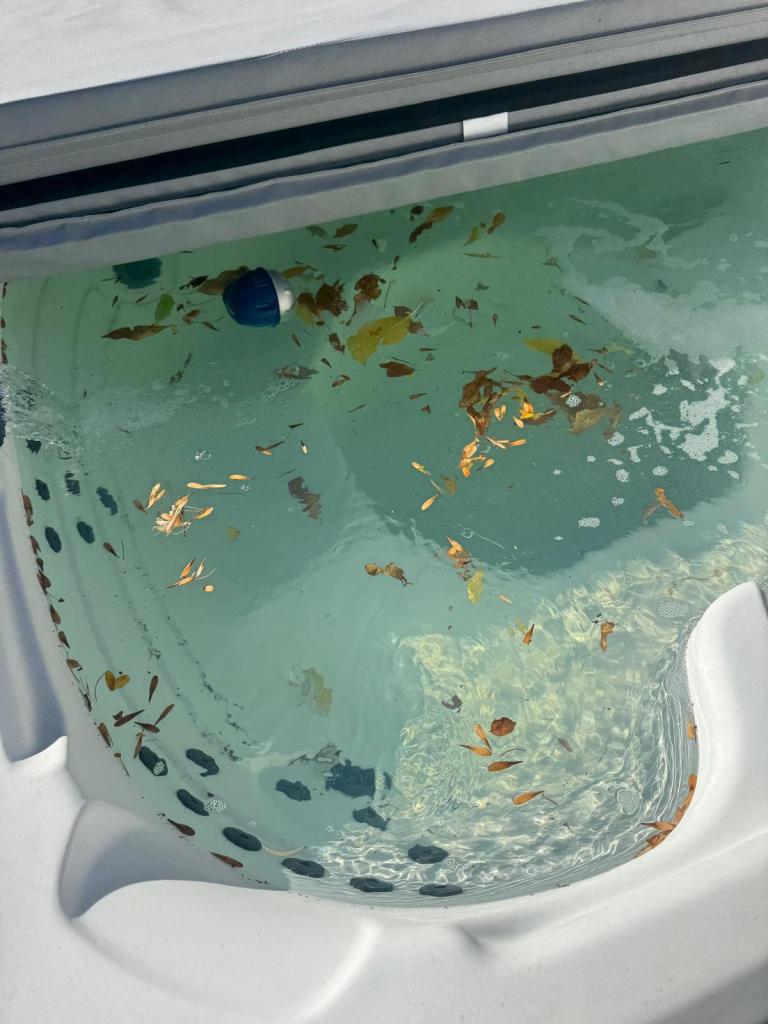
Skim floating debris
Use a small skimmer net to scoop out:
- Leaves and small twigs
- Bugs and pollen
- Hair, lint, and other surface debris
Do this regularly, especially after windy days or heavy use. It helps keep your hot tub clean and reduces the load on your filter.
Clean the bottom of the tub
For grit, sand, and dirt that sink to the bottom:
- Use a spa vacuum designed for hot tubs, or
- Use a simple siphon hose to gently pull debris off the floor of the tub without draining the water
Removing this buildup helps protect the shell from scratching and keeps the tub looking clean and clear between full drains.
Step 4 – Gently Clean Surfaces Above the Waterline
Even when you don’t drain the tub, you can still clean the parts you touch most: the seats, shell, and waterline.
Wipe the waterline and shell
- Use a soft cloth or sponge dipped in warm water and a spa‑safe cleaner, or a mild diluted vinegar and water solution.
- Gently wipe the waterline where oils, lotions, and residue tend to build up.
- Wipe the seats, headrests, and any exposed areas of the shell above the water.
This helps keep your hot tub’s shell looking clean and prevents a stubborn “ring” from forming.
Avoid the wrong cleaners
Do not use regular bathroom sprays, bleach, or harsh abrasive powders. These can:
- Foam up and throw off your water chemistry
- Damage the shell, jets, or hot tub cover
- Leave residues that irritate skin and eyes
Always choose products labeled as safe for hot tub or spa use, or stick to a mild vinegar solution for light buildup.
Step 5 – Shock the Water and Run the Jets
Once debris is removed and surfaces are wiped, it’s time to refresh the hot tub water itself. Shocking the water helps break down contaminants you can’t see and sanitizes the entire system.
Add the right amount of shock
- Check your hot tub size (gallons) and read the directions on your chlorine or non‑chlorine shock product.
- Measure the correct amount of shock—don’t guess or “pour extra just in case.”
- With the cover off, sprinkle the shock evenly across the surface of the water.
Always follow the label for how long to wait before using the tub again.
Run the jets to clean hidden areas
- Turn on the jets and open all air valves.
- Let the system run for the recommended time (often 15–20 minutes) so the treated water moves through the pipes, jets, and other hidden parts of your hot tub.
This circulation step helps clean inside your plumbing and supports overall hot tub maintenance without draining.
Step 6 – Optional Partial Drain and Refill
Sometimes the water just feels “tired” even after shock and cleaning, but it’s not bad enough for a full drain. In that case, a partial drain and refill can help.
How to do a partial drain
- Turn off power to the hot tub.
- Open the drain valve or use a hose pump to drain about 25–50% of the water.
- Close the drain and refill with fresh water to the normal water level.
- Turn the power back on, circulate, then retest and balance water chemistry.
This reduces dissolved solids and refreshes the hot tub water, helping extend the time between full drains. Just remember, it’s a helpful maintenance trick—not a permanent substitute for completely draining and refilling every few months.
Step 7 – Retest, Re‑Balance, and Final Checks
After finishing debris removal, surface cleaning, and shock treatment, it’s essential to make sure your hot tub water is safe and balanced.
Retest Water Chemistry
Use test strips or a liquid test kit to check sanitizer, pH, and alkalinity. Adjust as needed to keep your water within recommended ranges. Balanced water protects the tub’s surfaces, keeps jets running efficiently, and ensures a comfortable soak.
Circulate the Water
Turn on the jets for 15–20 minutes to allow chemicals to reach every part of the system, including plumbing lines and jets. This step ensures any remaining contaminants are treated and the water remains clean between deep cleans.
Inspect for Issues
Look for signs like cloudiness, unusual odors, or buildup along the waterline. If these problems persist, it may be time for a full drain and deep clean to restore water quality.
How to Clean a Hot Tub That Has Been Sitting
If your hot tub hasn’t been used for weeks or months, extra care is needed. Water that sits can develop bacteria, algae, or a layer of biofilm, which simple no-drain cleaning may not remove.
Steps for a Sitting Tub
- Drain the old water completely.
- Clean the shell thoroughly with a spa-safe surface cleaner.
- Flush the plumbing lines if possible, using a line flush product.
- Replace or deep-clean filters.
- Refill with fresh water and rebalance chemicals.
Even after long periods, following this process will ensure your tub is safe to use and helps extend the life of equipment.
Don’t Forget the Hot Tub Cover
Caring for your hot tub cover is also part of maintaining your hot tub:
- Keep your hot tub covered when not in use to protect the water from debris and UV damage.
- Use an approved hot tub cover cleaner or a mild cleaning solution to wipe down the cover.
- Never use bleach to clean the cover, as it can dry out and crack the material.
A well‑maintained hot tub cover helps keep your hot tub clean, maintains water level and temperature, and reduces how often you need to drain the hot tub.
How Often to Do No‑Drain Cleaning vs Full Draining
Now that you know how to clean a hot tub without draining, the next question is: how often should you do each type of maintenance?
Basic maintenance routine
A simple starting schedule for most hot tub owners:
Light no‑drain cleaning: about once a week
- Skim debris, wipe the waterline, and test water chemistry.
- Add sanitizer or shock as needed to keep levels stable.
Filter cleaning: every 1–4 weeks
- Rinse filters regularly with a hose.
- Deep-clean or soak filters monthly for best performance.
Full drain and deep clean: every 3–4 months
- Or follow your manufacturer’s recommendation.
- This removes dissolved solids, body oils, and buildup that no-drain cleaning cannot fix.
How Often Should You Clean a Hot Tub
Keeping your hot tub water safe and comfortable depends on regular maintenance. Even if you’re doing no-drain cleaning between uses, a complete routine is necessary to prevent buildup and maintain water quality.
Recommended cleaning schedule:
- Light no-drain cleaning: Once a week – skim debris, wipe the waterline, and check sanitizer levels.
- Filter maintenance: Rinse every 1–4 weeks; deep clean or soak monthly.
- Full drain and deep clean: Every 3–4 months, or as your hot tub manufacturer recommends. This removes oils, dissolved solids, and buildup that no-drain cleaning cannot handle.
Tip: Increase cleaning frequency if your hot tub gets heavy use, or if you notice cloudy water, odors, or visible residue.
When you need more frequent care
You may need to clean your hot tub more often if:
- The tub gets heavy use (parties, frequent guests, Airbnb, etc.).
- You have very hard water that leaves more scale and residue.
- You notice cloudy water or odors returning quickly between cleanings.
In those cases, step up your no‑drain cleaning and consider more frequent water changes to keep your hot tub clean, safe, and enjoyable.

When to Call Missa Clean for Professional Hot Tub Care
Learning how to clean a hot tub without draining water is helpful, but you do not have to handle everything on your own. If you think, “I don’t have time to clean my hot tub,” or your hot tub’s water won’t stay clear no matter what you do, professional help can make all the difference.
Missa Clean offers specialized hot tub cleaning as part of your home care routine. A professional deep clean can:
- Flush and help clean internal plumbing that regular products cannot reach.
- Clean the shell, jets, and filters thoroughly and safely.
- Reset your water chemistry so you can start fresh with clean and clear hot tub water.
If you are ready to maintain a clean, comfortable, and well‑maintained hot tub without the stress, reach out to Missa Clean to schedule professional hot tub care and regular cleaning support. Call (720) 325‑1600 or contact us through our website to book your service.
How often should I drain and refill my hot tub if I’m doing no‑drain cleaning?
Even with regular no‑drain cleaning, most hot tubs should be fully drained and refilled every 3–4 months, or as your manufacturer recommends.
Can I just keep cleaning without ever draining the water?
No. Over time, dissolved solids, body oils, and contaminants build up in the water. At some point, you must drain and refill to protect water quality and your equipment.
Is it safe to use bleach or regular bathroom cleaners in my hot tub?
No. Household bleach and many bathroom cleaners can damage the shell, upset water chemistry, and irritate skin. Use only hot‑tub‑specific cleaners or mild, non‑abrasive products.
How often should I clean my hot tub filters?
Rinse filters regularly (every 1–4 weeks) and deep‑clean or soak them periodically. Replace them when they no longer come clean or are more than about a year old.
What are signs I need to drain my hot tub immediately?
Very cloudy or smelly water, heavy foam, visible algae or slime, or a tub that’s been sitting unused for a long time all mean it’s time to drain, deep clean, and refill.